| |
Contemporary paintings of locations around Wales
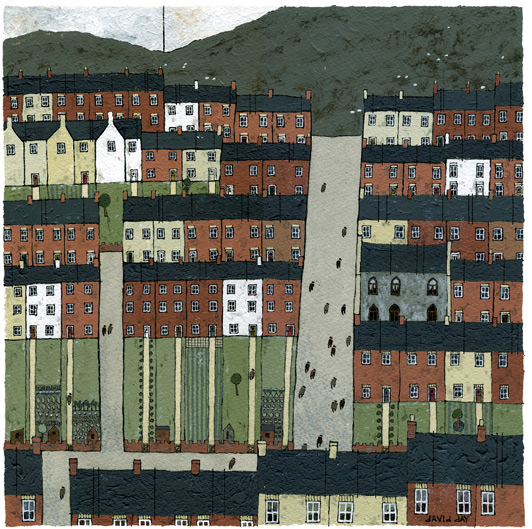
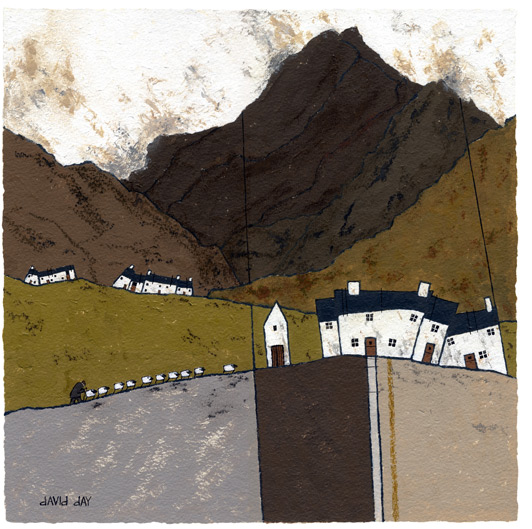
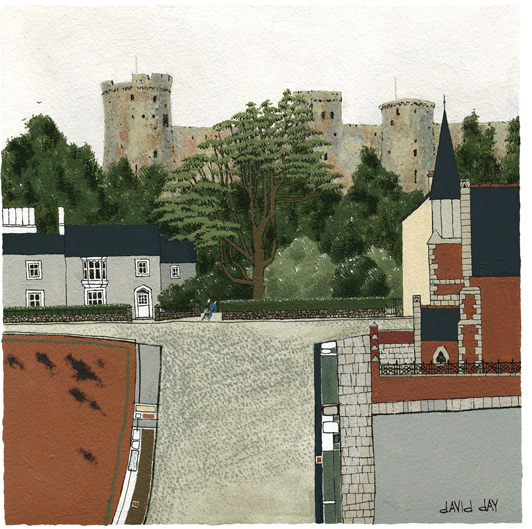
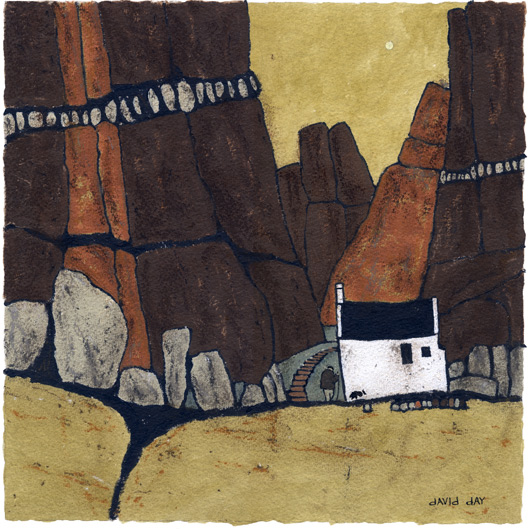
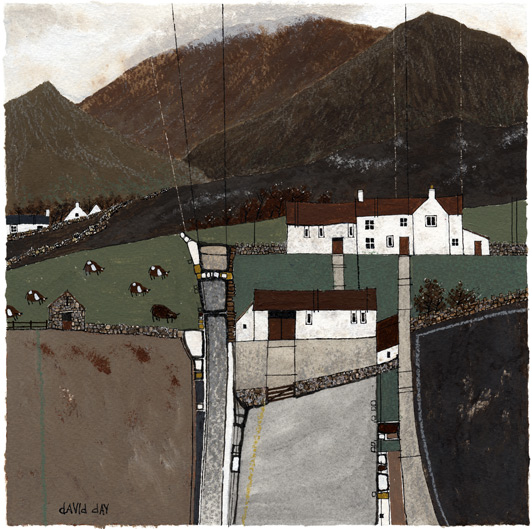
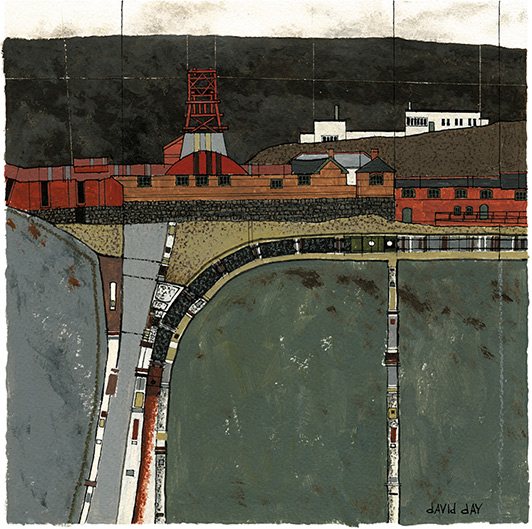
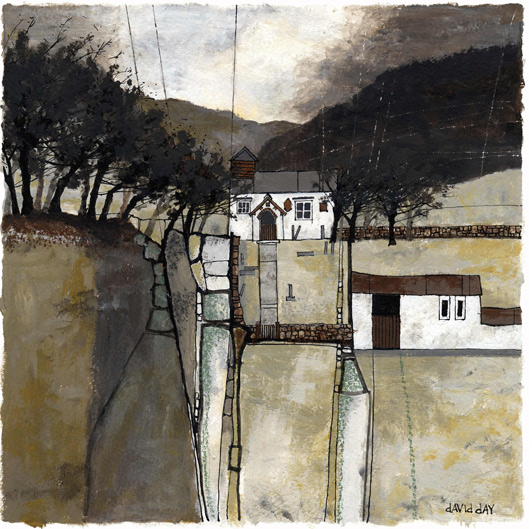
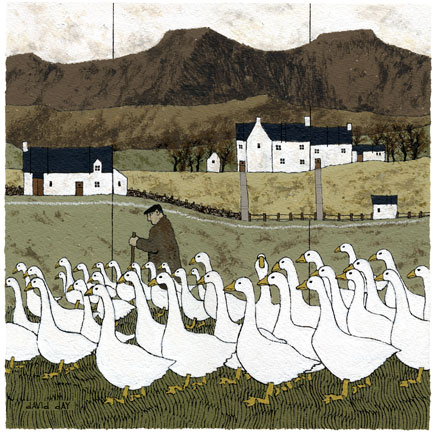
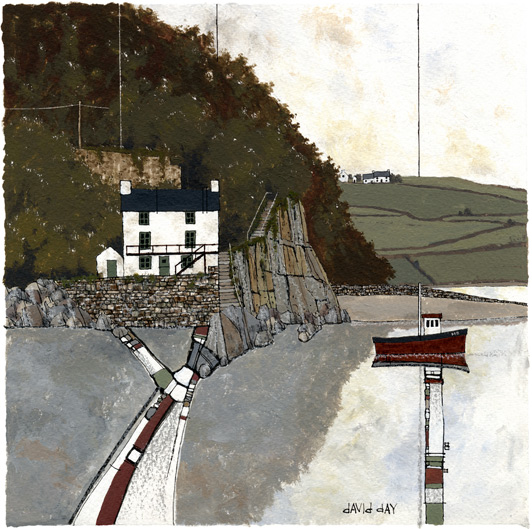
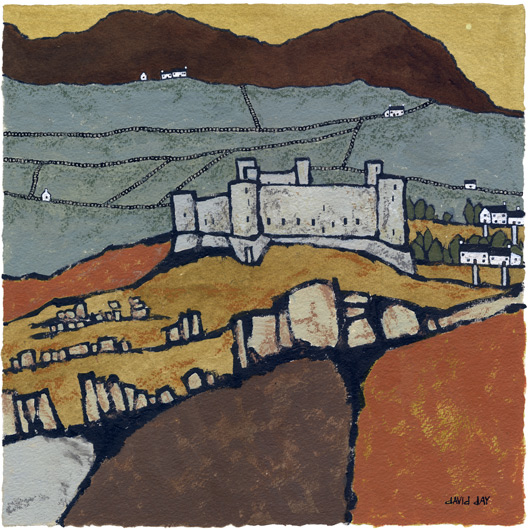
David Day was shortlisted for the Welsh Artist of the Year 2009 award for his contemporary paintings of locations around Wales. Limited edition prints of his acrylic paintings are available to purchase via this website. Subjects include Capel Sant Gofan, Capel-Y-Ffin in the Black Mountains, the Pierhead Building at Cardiff Bay, The Boathouse at Laugharne, Big Pit in Blaenafon, Tenby Harbour, Blaenafon Ironworks and Stack Square, Crickhowells Table Mountain, Usk Castle, River Monnow, Monmouth and The Sugar Loaf, Abergavenny.
To view larger versions of these paintings, please click on the images below. If you would like to purchase any of these limited edition prints then please go to our secure shop. Postage and packing is free if you are in the UK. |
|
|
| Buy limited edition prints |
 |
Wales ››
Read about the Welsh locations featured in David Day's artwork |
|
| |
|
David Day paints scenes and landscapes from around Wales, the following locations are featured in his paintings:
Capel Sant Gofan
Situated on the cliffs of the spectacular Pembrokeshire National Park, five miles south of Pembroke, and one mile beyond the village of Bosherston, with its thirteenth century church, and famous lily ponds, this is one of the most picturesque sixth century hermits' chapels in the United Kingdom. St Govan was a hermit and saint who lived there many centuries ago.
Legend says that St Govan had a silver bell but it was stolen by pirates from its bell tower. After praying for its return, angels retrieved the bell and placed it inside a rock outside the chapel where it would be safe, St Govan would then tap the rock and it would create a note a thousand times stronger than the sound of the original bell.
The large boulder became known as the Bell Rock.
Pierhead Building, Cardiff
The Grade 1 listed Pierhead Building of the National Assembly for Wales is situated near to the Senedd building and the Wales Millennium Centre in Cardiff Bay, Wales. It is one of the most familiar landmarks in Cardiff. It was built in 1897 and designed by William Frame. William Burges was Frame's mentor, Burges was the architect of Castell Coch and some of the more recent elements of Cardiff Castle. The Pierhead Building replaced the Bute Dock Company HQ which was destroyed by fire in 1892.
The Pierhead Building has a French Gothic Renaissance theme consisting of gargoyles, hexagonal shaped chimneys, carved friezes and it's ornamental clock tower. Glazed terracotta blocks finish the exterior of the building. The Pierhead Building was given the status of a Grade One listed building because of it's outstanding features and it's part in the evolution of Cardiff and industrial Wales. In 1947 the Pierhead Building became the administrative office for the Port of Cardiff, today it is the Visitor and Education Centre for the National Assembly for Wales, "The Assembly at the Pierhead".
David Day's painting of the Pierhead Building features the Wales Millennium Centre in the background. The unique and spectacular Wales Millennium Centre (Welsh: Canolfan Mileniwm Cymru), is an arts centre located in the Cardiff Bay area of Cardiff, Wales, locally it is know as the Armadillo.
Capel-Y-Ffin, Black Mountains
Fourteen miles from Abergavenny and eight miles from Hay-on-Wye the hamlet of Capel-y-ffin is situated. It stands in the Black Mountains region of the Brecon Beacons National Park. The monks at the monastery at Capel-y-ffin had a hard life. Everyday they had to take it in turns to be led to the cloister with a halter, they were then spat on and walked over by the rest of the monks to earn their bread for that day. Father Ignatius once wrote, 'We never allow ourselves to think....‘It is all decided for us', referring to the ban on reading anything except the Bible.
Father Ignatius (Joseph Leycester Lyne) built the monastery at Capel-y-ffin a few decades before artist Eric Gill and his associates came to the monastery to live and work, it was at Capel-y-ffin that Gill designed the Perpetua and Gill Sans typefaces.
Read Ben Mallalieu's Guardian article about Capel-y-ffin ››
Usk Castle
Usk castle and Usk (Welsh: Brynbuga) town was established around 1120, after the other Norman settlements and castles of the area like Abergavenny Castle and Monmouth Castle. Before this time the Romans had established their Legionary fortress in Usk, which they later moved to Caerleon (Welsh: Caerllion).
During open conflict in this area of the Welsh Marches, Usk was captured by the Welsh in 1138, it then ended up back in Norman hands before in 1174 it was captured again by the Welsh again along with Abergavenny.
The Norman's brought in Marcher Lord Richard Fitz Gilbert de Clare to strengthen the castle's defences against further Welsh attack, but he was ambushed and killed by the Welsh outside Abergavenny in 1136. The Welsh took control of Usk castle again in 1184.
Gilbert de Clare, eighth Earl of Hertford, who was another holder of Usk Castle, dies at the Battle of Bannockburn when the English crown's focus was on defeating the Scots, the castle was then left in relative peace until the early 15th century.
The Boathouse, Laugharne
The Boathouse at Laugharne was the home of Dylan Marlais Thomas the famous Welsh poet who wrote exclusively in English. As well as poetry, he wrote short stories and scripts for film and radio, which he often performed himself. He won great acclaim for his public readings, especially in America, his impressive grandiloquent voice and subtle Welsh lilt became almost as famous as his poetry and short stories.
Dylan Thomas lived at the Boathouse, Laugharne for the last four years of his life during which time many major pieces of work were written - including Under Milk Wood. The Boathouse, where Dylan and Caitlin lived with their children, Aeronwy, Llewelyn and Colm from 1949 to 1953, is now a heritage centre.
Across the river from the Boathouse, stands Blaen Cwm, Llansteffan and Fern Hill, the farm that came to represent childhood innocence and of the inescapable march of time. On the far horizon are Worms Head and the Gower Peninsula where the setting for one of Dylan's most compelling short stories 'Who Do You Wish Was With Us?'.
Ironworks & Stack Square, Blaenafon
Blaenavon Ironworks is an industrial museum in Blaenavon (Welsh: Blaenafon) in South East Wales. The ironworks was importance in the development of the ability to use cheap, low quality, high sulphur iron ores around the world. Sidney Gilchrist Thomas with his cousin Percy Gilchrist conducted experiments at the Blaenafon Ironworks site which led to the basic steel process otherwise know as the "Gilchrist-Thomas process".
Stack Square and Engine Row are a group of stone cottages stand next to the Ironworks. Stack Square was featured in the BBC Wales television series Coal House and Coal House at War. The houses were built around 1788 for the skilled workers who operated the furnaces. One of the early occupants was Joseph Hampton from the Stourbridge in Worcestershire, he was a superintendent of the Ironworks for nearly thirty years before he died in 1832. The square which the cottages form had a 50 metre high chimney stack in the middle, a stack for a new engine house that was placed there in 1860, the base can still be seen today. The central range of Stack Square which was the company office, shop and manager's house since 1788, was converted in to accommodation in the 1860s. Stack square is a Scheduled Ancient Monument in the care of the state and has been carefully conserved.
Visit the BBC Coal House website ››
Tenby Harbour
Tenby (Welsh: Dinbych-y-Pysgod) translates in English to 'little town of the fishes or little fortress of the fish'. It is a walled seaside town in Pembrokeshire, South West Wales, lying on Carmarthen Bay. Tenby has two and a half miles of sandy beaches, it has 13th century medieval town walls that include the Five Arches barbican gate. Tenby is also the location of the fifteenth century St. Mary's Church and the Tudor Merchant's House owned by the National Trust. Tenby also has the Pembrokeshire Coast Path, part of Britain's only coastal National Park. Regular boats sail from Tenby's harbour to the monastic Caldey Island, and during low tide St Catherine's Island is linked to the town.
Big Pit, Blaenafon
Big Pit is situated in Blaenavon, Torfaen, Wales. It was a working coal mine, near to the preserved Pontypool and Blaenavon Railway. The mine was closed in 1980 but reopened for visitors in 1983. It is now preserved for visitors by the National Museum Wales. Big Pit National Coal Museum is an Anchor Point of ERIH, The European Route of Industrial Heritage. Big Pit is now a World Heritage Site.
The pit was first worked in 1860, it was the first shaft in Wales large enough to allow two tramways, hence it's name "Big Pit". During the 1870s the shaft was deepened to 293 feet. Big Pit provided employment for 1,122 people by 1908, but the number of people working at Big Pit gradually decreased, and by 1970 the workforce only numbered 494. It closed on February 2, 1980.
Big Pit was awarded the Gulbenkian Prize in 2005, the prestigious prize was awarded to Big Pit for it's track record of imagination, innovation and excellence.
Blaenafon was also the place of the world's first railway viaduct. In 2001, the Channel 4 archaeology programme "Time Team" came to Blaenavon to find the lost viaduct. On the third day of excavation Time Team managed to uncover the to of the viaduct but because of safety issues they were unable to dig any further.
You can read more about Blaenafon's lost viaduct on the Time Team website here ››
Brecon Farmhouse
Brecknockshire also know as Breconshire is one of thirteen historic counties of Wales, and a former administrative county. David Day's 'Brecon Farmhouse' painting reflects the unique design of Brecon Farmhouses which is particular to the area.
Table Mountain, Crickhowell
Crickhowell (Crug Hywel, Crughywel, or Crucywel in Welsh) is a busy market town within the picturesque Usk Valley. It is situated in the east of the Brecon Beacons National Park below the striking mountain top of Table Mountain. It is the main centre from which to explore the eastern Beacons. Crickhowell gets its name from the iron age hill fort, Crug Hywel, on nearby Table Mountain. Crickhowell is the main shopping town for local villages Llangattock, Llanbedr, Llangenny, Glangrwyney, Tretower, and Cwmdu. The town has a lot of historical interest, it has castles from the middle ages, churches, coaching inns and a striking 17th century bridge.
The Wheatsheaf
The Wheatsheaf Inn, in Llanhennock (Welsh: Llanhenwg) Village, Monmouthshire is a warm and welcoming pub situated just outside the Roman town of Caerleon, Newport. The Wheatsheaf, is a traditional, unspoilt two bar village pub, with fine views of the surrounding countryside. The car park looks over the Usk Valley and the Celtic Manor golf course which is the venue for the 2010 Ryder Cup. The public bar contains interesting local and brewing memorabilia and throughout the winter months a real fire can be found alight, creating a cosy and welcoming atmosphere. Boules tournaments are held regularly on the numerous Boules pitches in the Car Park.
Visit the Wheatsheaf's website ››
© 2010 All rights reserved. Artist David Day. No images from this website can be used elsewhere without the permission of David Day
|
|